Free Spirit Spheres: Suspended Forest Homes Above the Ground
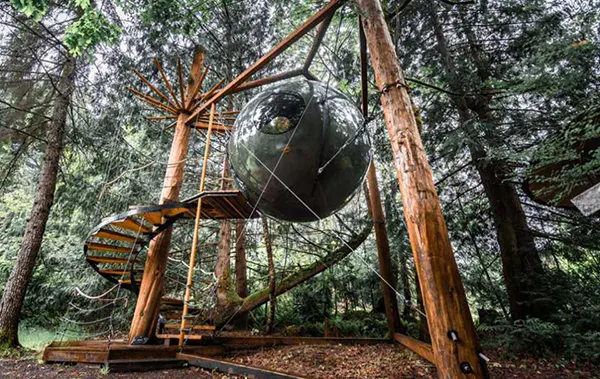
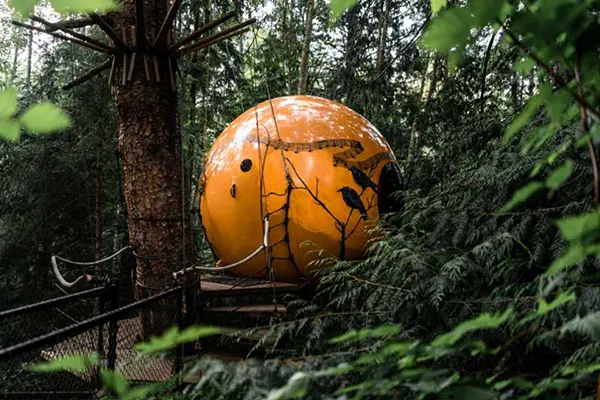
Free Spirit Spheres are among the most unusual accommodation concepts in Canada’s eco-tourism sector. Hidden within the forests of Vancouver Island in British Columbia, these handcrafted spherical cabins hang between trees several metres above the ground and combine engineering, woodworking, and low-impact tourism in one compact living space. Unlike conventional treehouses, the structures are designed as perfectly balanced spheres that gently move with the wind, creating a completely different sensation from a standard hotel room or cabin stay.
The Story Behind Free Spirit Spheres
The concept was created by Canadian craftsman Tom Chudleigh, who spent years experimenting with lightweight spherical structures that could exist in harmony with forest environments. His early prototypes focused on balancing durability, weather resistance, and minimal impact on surrounding trees. By the late 1990s, the first suspended sphere designs were already attracting interest from travellers searching for accommodation beyond traditional hotels.
Each sphere is individually handcrafted using materials such as fibreglass, cedar wood, marine-grade rope systems, and aluminium framing. The suspended design allows the structures to remain elevated without concrete foundations or extensive land clearing. This approach became one of the defining characteristics of the project and helped Free Spirit Spheres gain international recognition in eco-tourism publications and architectural media.
As of 2026, the company continues operating on Vancouver Island and remains one of the most recognisable examples of forest-based alternative accommodation in North America. Travellers visiting British Columbia often include the spheres as part of broader eco-travel routes involving rainforest parks, Pacific coastline exploration, and sustainable tourism experiences.
How the Spherical Design Changes the Living Experience
Unlike square cabins or compact hotel rooms, a spherical interior changes how people move, rest, and perceive space. The curved walls reduce sharp visual lines and create a cocoon-like atmosphere inside the structure. Many guests describe the experience as surprisingly calming because the movement of the sphere resembles the gentle motion of a boat.
The suspension system also affects sound perception. Rainfall, forest winds, and birds become more noticeable inside the sphere due to the curved acoustic properties of the structure. During storms, the cabins sway slightly rather than resisting movement completely, which distributes external force more naturally than rigid constructions.
Interior layouts are intentionally compact yet functional. Most spheres contain a sleeping area, built-in storage, lighting, ventilation systems, and small seating arrangements. Some units include electricity and heating, while larger models may feature additional comforts for longer stays. Despite the limited space, the design prioritises practicality over luxury excess.
Location, Environment, and Sustainability
The Free Spirit Spheres site is located near Qualicum Beach on Vancouver Island, an area known for dense temperate rainforests and coastal landscapes. The surrounding region contains Douglas fir trees, cedar forests, and numerous protected natural areas that attract hikers, photographers, and wildlife enthusiasts throughout the year.
One of the main reasons the project gained attention from environmental designers is its low-impact construction method. Traditional hotels often require extensive ground preparation, heavy infrastructure, and large-scale material transportation. In contrast, suspended spheres rely on tension systems attached carefully to trees, allowing the surrounding ecosystem to remain relatively undisturbed.
Energy consumption is also lower compared to standard accommodation complexes. The compact interiors require less heating, fewer construction materials, and reduced maintenance resources over time. As sustainable tourism continues developing globally in 2026, projects like Free Spirit Spheres are increasingly referenced in discussions about environmentally responsible accommodation models.
What Guests Can Expect During a Stay
Access to the spheres usually involves wooden staircases and suspension bridges leading into the forest canopy. The approach itself becomes part of the experience because guests gradually leave behind roads, parking areas, and urban noise before reaching their elevated accommodation.
Inside the sphere, storage space is intentionally limited, encouraging short-term minimalist travel. Many visitors spend most of their time outdoors exploring nearby trails, beaches, and forests rather than remaining inside the cabin all day. This balance between shelter and nature is central to the overall concept.
Weather conditions also shape the experience significantly. During autumn and winter months, rain hitting the curved exterior creates a distinctive sound environment, while summer evenings offer views of forest light filtering through the trees. The setting changes noticeably throughout the seasons, which encourages repeat visits during different times of the year.
Architecture, Tourism Trends, and Global Influence
The success of Free Spirit Spheres influenced many later developments in alternative accommodation design. Over the past decade, architects and eco-resort operators in countries such as Sweden, Japan, New Zealand, and Norway have experimented with suspended cabins, compact forest lodges, and elevated pod-style accommodation inspired partly by similar concepts.
Social media and travel photography also contributed to the growing popularity of unusual accommodation types. Travellers increasingly search for places that combine natural surroundings with distinctive architecture rather than standard hotel interiors. This shift helped alternative lodging concepts move from niche tourism into mainstream travel discussions.
Despite growing competition from modern glamping resorts and luxury treehouse developments, Free Spirit Spheres maintains a unique position because of its original engineering approach and handcrafted identity. Many newer projects imitate the visual appearance of suspended cabins but lack the same structural philosophy and historical background associated with the Canadian concept.
The Future of Suspended Forest Accommodation
Architects working in sustainable tourism continue studying lightweight suspended structures because they reduce permanent alteration to natural landscapes. As environmental regulations become stricter in many regions, elevated micro-accommodation may become more common in protected forest areas where large-scale hotel construction is restricted.
Technological improvements are also shaping future designs. Modern insulation materials, compact solar systems, and advanced moisture-control technologies now allow small forest dwellings to operate more efficiently in different climates. Some newer projects already integrate smart energy monitoring and rainwater collection systems without increasing structural weight significantly.
Free Spirit Spheres remains one of the clearest examples of how unconventional architecture can become both commercially successful and environmentally conscious at the same time. More than two decades after the first installations appeared on Vancouver Island, the concept still attracts travellers searching for a quieter and more nature-focused alternative to conventional accommodation.