HOSHINOYA Nara Prison: How a Meiji-Era Japanese Prison Became a Luxury Hotel
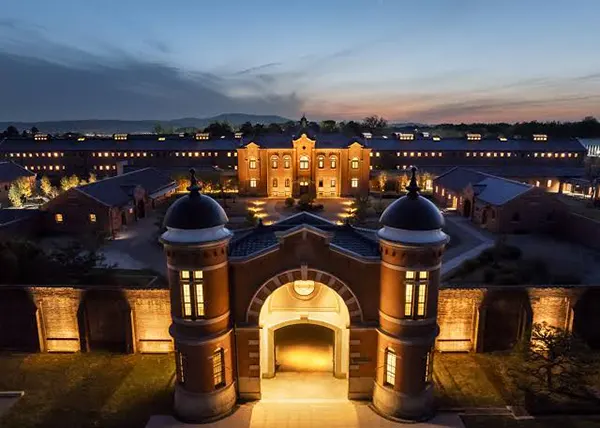
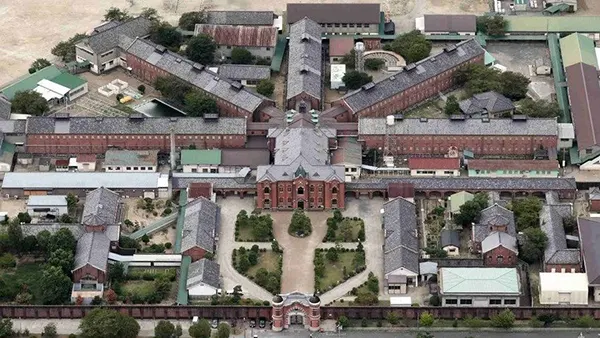
HOSHINOYA Nara Prison is one of Japan’s most unusual examples of historic architecture given a new purpose. Opened as a luxury hotel in Nara on 25 June 2026, it occupies the Former Nara Prison, a red-brick complex completed in 1908 during the Meiji era and later used for decades as the Nara Juvenile Prison. Rather than replacing the original buildings with a conventional hotel, the project retained the prison’s defining architectural features and converted former cell wings into 48 suites. The result brings together several layers of Japanese history: the rapid modernisation of the early twentieth century, changing approaches to corrections and rehabilitation, the preservation of nationally important architecture, and contemporary hospitality. Its significance therefore extends beyond the novelty of sleeping in a former prison. The property represents a rare case in which a building created for confinement has been adapted for accommodation while its difficult institutional past remains visible through both the architecture and the neighbouring Nara Prison Museum.
From a Meiji-Era Prison to a Nationally Protected Landmark
The story begins during one of the most transformative periods in Japanese history. Construction of the Nara prison complex began in 1901, when the Meiji government was modernising the country’s legal and penal systems as part of a much broader programme of institutional reform. It formed part of the so-called Five Great Prisons of Meiji, alongside major prisons built in Nagasaki, Kanazawa, Chiba and Kagoshima. Completed in 1908, the Nara complex was designed by Keijiro Yamashita, an architect associated with the Ministry of Justice who played an important role in the development of modern prison architecture in Japan. The scale and appearance of the buildings were deliberate. Red brick, carefully proportioned façades, arches and a symmetrical entrance gave the institution an architectural presence closer to a substantial civic building than the austere concrete prisons that many visitors might expect today.
The prison continued to operate through major political and social changes in twentieth-century Japan. In 1946, shortly after the end of the Second World War, it became the Nara Juvenile Prison. Its role increasingly included education, vocational preparation and rehabilitation alongside incarceration. The institution eventually offered 16 vocational training programmes, while educational initiatives included correspondence studies and links with secondary education. One particularly unusual connection with the surrounding community was the Wakakusa Barbershop, where young inmates received practical training and members of the public could have their hair cut. According to the historical archive associated with the former prison, the barbershop served more than 18,000 users over its lifetime. Details such as these are important because they show that the history preserved here is not limited to bricks, corridors and locked cells; it also concerns generations of prisoners, staff, teachers and local residents.
After 109 years of institutional use, the Nara Juvenile Prison was abolished on 31 March 2017. The same year, the Meiji-era buildings were designated an Important Cultural Property of Japan in recognition of their architectural and historical value. This protection fundamentally shaped what could happen next. The complex could not simply be cleared or remodelled without regard for its original character. Instead, preservation, structural work and reuse had to be considered together. A public-private project involving the national government and specialist organisations subsequently prepared the historic buildings for a new function. The eventual conversion took roughly seven years of restoration and renovation work. By the time HOSHINOYA Nara Prison opened in 2026, the former institution had therefore passed through three distinct identities: an early modern prison, a juvenile correctional facility and, finally, a protected heritage complex combining accommodation with a museum.
Why the Original Prison Architecture Was Worth Preserving
The most recognisable feature of the complex is its radial layout. The original prison used what is generally known as the Haviland System, in which several accommodation wings extend from a central observation point. At Nara, five major wings spread outward from the former central guardhouse. The arrangement allowed staff to oversee movement through different sections of the prison from a strategically placed central position. For present-day visitors, however, the impact is primarily architectural: long corridors meet at an unusually dramatic central space beneath a high roof and natural light. This configuration is one reason the Former Nara Prison is regarded as such an important surviving example of Meiji-era institutional design. Other members of the Five Great Prisons were altered, partly demolished or lost, leaving the Nara complex as the only one to retain its overall historic composition to such an extensive degree.
The red brick is equally important. Much of it was laid by hand more than a century ago, and restoration work revealed sections that had previously been concealed beneath plaster. In the hotel rooms, selected brick surfaces were left exposed rather than hidden behind entirely new finishes. Their irregular tones and signs of age are therefore part of the interior rather than flaws to be covered. High arched windows, ceiling details and the proportions of the former cells have also been retained where possible. These surviving elements give guests a clear sense that the rooms have been formed within an existing historic structure. Modern materials are present, including structural reinforcement, wood panelling, lighting and contemporary furniture, but they do not attempt to imitate the original construction. The contrast makes it easier to distinguish the Meiji-era fabric from the additions required for twenty-first-century use.
Preservation in this case also required deciding which parts of the former prison should become private hotel spaces and which should remain accessible to a wider audience. The answer was not to turn the entire complex into accommodation. HOSHINOYA Nara Prison occupies part of the historic group of buildings, while the adjoining Nara Prison Museum provides public access to the history of the institution and its architecture. This division is particularly relevant for a former prison, because converting every surviving space into an exclusive guest area could have reduced a complex social history to decorative scenery. Instead, the museum addresses correctional history, the lives regulated within the prison and broader questions about confinement and freedom. The hotel and museum therefore serve different purposes while sharing the same heritage setting: one supports the continued use and maintenance of the buildings, while the other gives visitors a place to understand why they matter.
How Former Prison Cells Became 48 Luxury Suites
HOSHINOYA Nara Prison opened with 48 guest rooms, all created within buildings originally designed for incarceration. The conversion did not attempt to use individual cells as tiny bedrooms. Instead, multiple former cells were connected to create each suite, with rooms generally incorporating the space of nine to eleven cells. The change is substantial: areas once designed to restrict movement now contain separate zones for sleeping, sitting and dining. The largest room category, known as the 11-Cell Deluxe, makes the transformation especially clear, but the principle applies throughout the accommodation. Removing selected internal divisions allowed the architects to create usable modern rooms without eliminating the repeated rhythm of the original cell structure. High ceilings, thick walls and historic window positions still make the building’s former function recognisable, even though the interiors now serve an entirely different purpose.
The surviving brickwork has a strong influence on the atmosphere of the rooms. During renovation, plaster was removed in selected locations to expose original red brick, while wooden surfaces were introduced to soften the more institutional character of the building. European cherry wood was chosen for parts of the interior, creating a visual connection with the Western architectural influences that Japan was adopting during the Meiji period. Furniture and fabrics are generally restrained rather than heavily decorative, allowing the historic walls, windows and unusual proportions of the rooms to remain prominent. Traditional Japanese craft references also appear in details such as Arita porcelain. The approach avoids recreating a prison cell as a themed bedroom; instead, the old structure acts as the physical framework around which contemporary accommodation has been built.
Public areas follow a similar principle. The main lounge occupies a former wooden auditorium and retains architectural details while introducing modern seating, books and areas for drinks and refreshments. The internal courtyard has also changed considerably. Prison courtyards were once defined by controlled movement and the enclosing presence of high walls, but landscaping has introduced trees, planting, paths and places to sit. Those walls have deliberately been retained, so the contrast between past and present remains apparent. After dark, carefully positioned lighting highlights the brickwork and garden rather than flooding the courtyard with bright illumination. These choices give the hotel a quieter character than a conventional large resort. The attraction lies less in a long catalogue of leisure facilities and more in spending time inside an exceptionally preserved building whose original shape continues to determine how guests move through it.
What a Stay at HOSHINOYA Nara Prison Is Like in 2026
As of 2026, the practical hotel experience is relatively straightforward despite the unusual setting. The property has 48 rooms designed mainly for one or two guests, with check-in from 3:00 pm and check-out at noon. Wi-Fi is available in the rooms, and outdoor parking is provided. There is no hotel shuttle, so travellers arriving by rail normally need a taxi, bus or other local transport. The property is approximately six minutes by car from Kintetsu Nara Station and around ten minutes from JR Nara Station under normal conditions. This places it outside the busiest central streets while keeping Nara’s major historic area reasonably close. HOSHINOYA positions the property at the upper end of the accommodation market, and rates vary according to date and availability. Meals are generally booked separately, so the total cost of a stay can be significantly higher than the room rate alone.
Food at the hotel uses the Meiji period as historical context without attempting to reproduce prison meals. The signature dinner, called Gastronomy Chronicle, looks at the development of Western cuisine in Japan after the country began adopting European culinary techniques during the nineteenth century. The course moves through different periods in that history, combining French influences with Japanese ingredients and interpretations. Breakfast choices include a Meiji-style menu inspired by foods that became associated with Japan’s early enthusiasm for Western cooking, including fried dishes, as well as Japanese and more conventional Western breakfasts. Other dinner options include wagyu shabu-shabu and seasonal Japanese set meals. This makes the restaurant part of the broader historical idea behind the hotel: the Meiji period is presented not simply as an architectural date, but as a period when Japanese daily life, design, technology and food were changing rapidly.
Activities are also linked to the cultural setting rather than being generic resort entertainment. The Akane Tea Salon pairs sweets with Japanese tea from Nara Prefecture, while an evening fragrance-blending session refers to the growing use of Western-style perfume in Japan during the Meiji era. An adults-only gramophone programme uses recorded music to evoke another technology that arrived during the same period. Guests can also book a rickshaw outing through Nara, connecting the stay with a form of transport closely associated with nineteenth-century Japan. None of these activities is essential to appreciating the building, and visitors primarily interested in architecture can spend much of their time simply moving through the historic corridors, lounge and courtyard. Still, the programmes provide context that helps prevent the property from relying solely on the novelty of its former prison identity.
The Nara Prison Museum and the Meaning of the Conversion
The Nara Prison Museum by Hoshino Resorts opened on 27 April 2026, almost two months before the hotel. It occupies part of the Former Nara Prison complex but operates as a visitor attraction in its own right, meaning people do not need to stay overnight to see the heritage site. Its exhibitions address the history of the prison, the development of correctional institutions and the relationship between imprisonment and personal freedom. Architecture forms part of that story rather than functioning merely as a backdrop. Visitors can see historic spaces and learn how the radial prison layout worked, while guided activities add access to areas such as the central guard station. For ordinary museum visitors, advance ticket booking is required and daily admission numbers are controlled. The standard museum hours in 2026 are 9:00 am to 5:00 pm, with final admission at 4:00 pm.
Hotel guests have a closer connection to the museum. HOSHINOYA provides an internal route between the accommodation and the museum, and its 2026 arrangements include complimentary guest access during regular museum hours. Selected museum areas are also available to staying guests during additional morning and evening periods, allowing parts of the former prison to be seen when ordinary day visitors are not present. This relationship matters because a stay inside the former cell blocks makes more sense when paired with an understanding of what the institution actually was. The museum records not only the celebrated architecture but also the regulated routines of prisoners, rehabilitation programmes and the changing role of the facility after it became the Nara Juvenile Prison. In this respect, the historical interpretation provides necessary context for a building that could otherwise risk being treated simply as an unusual luxury setting.
The location also makes it possible to place the prison within the wider history of Nara rather than treating it as an isolated attraction. Nara served as Japan’s permanent capital in the eighth century and contains some of the country’s most significant Buddhist sites and historic landscapes. Tōdai-ji, known for its Great Buddha Hall, is within walking distance of the museum area, while Nara Park and several other major sights can be reached by local bus or taxi. The contrast is striking: ancient temples, Meiji-era government architecture and modern tourism all exist within a relatively compact part of the city. For travellers who previously treated Nara mainly as a day trip from Kyoto or Osaka, the opening of the prison hotel provides another reason to remain overnight and spend more time in the northern part of the city.
What Visitors Should Know Before Booking
The first point to understand is that HOSHINOYA Nara Prison is not intended to recreate the conditions of imprisonment. The former cells have been radically expanded, modern bathrooms and living areas have been installed, and service follows the standards of an expensive contemporary hotel. Travellers expecting a deliberately uncomfortable prison-themed stay are therefore looking at the wrong type of property. Its main interest is the chance to stay inside protected Meiji architecture while still seeing original materials and spatial features. This distinction also explains the relatively small number of rooms. Converting the historic wings into 48 suites required substantially more space per guest than the original prison layout provided, but packing a larger number of conventional hotel rooms into the building would have required more extensive alteration of the surviving fabric.
Visitors interested primarily in the history rather than an overnight stay can use the Nara Prison Museum instead. Public museum tickets should be arranged in advance, especially on dates when visitor numbers are high, and some guided activities require separate reservations. Hotel guests should also check current conditions for meals and special programmes before arrival, because several dining options and activities require advance booking and schedules can change. Transport deserves similar planning. There is no hotel shuttle, and although the property is close to central Nara by car, travellers carrying luggage may find a taxi more practical than walking from either main railway station. Anyone combining the prison complex with Tōdai-ji, Nara Park and other historic sights should allow enough time rather than treating the museum as a brief stop between better-known landmarks.
The most important aspect of HOSHINOYA Nara Prison is ultimately the balance between reuse and memory. A prison is not a neutral historic building: it was created to confine people and spent more than a century performing that function. Turning such a place into expensive accommodation can therefore feel uncomfortable if the institution’s history is reduced to aesthetics. The Nara project addresses part of that problem by protecting major architectural elements and maintaining a museum devoted to the prison’s past, rehabilitation work and questions surrounding freedom. Visitors can judge the conversion from different perspectives, but the result provides a concrete example of adaptive reuse on a scale rarely seen in Japan. Rather than leaving an enormous protected complex vacant or allowing it to deteriorate, the former prison now has new uses while substantial parts of its architecture and documentary history remain accessible. That tension between preservation, hospitality and remembrance is what makes HOSHINOYA Nara Prison significant in 2026.