Montaña Mágica Lodge, Chile — A Waterfall-Covered Volcano Hotel in Patagonia
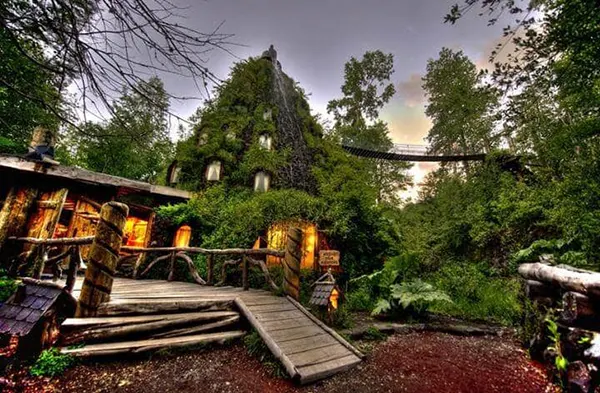
Nestled deep within Chile’s Huilo Huilo Biological Reserve, Montaña Mágica Lodge stands out as one of the most unusual accommodation concepts in the world. Designed to resemble a natural volcano, this wooden structure is entirely covered in vegetation, with a constant stream of water cascading from its peak like a living waterfall. Built to blend into the surrounding temperate rainforest, the lodge combines architectural creativity with ecological awareness, offering visitors a rare chance to stay inside a structure that feels inseparable from the landscape.
Location and Natural Surroundings of Montaña Mágica Lodge
The lodge is located in southern Chile, within the Huilo Huilo Reserve in the Los Ríos Region. This protected area is known for its dense Valdivian rainforest, one of the few temperate rainforests in the world, characterised by high biodiversity and significant rainfall throughout the year. The setting plays a crucial role in shaping the experience, as guests are surrounded by waterfalls, volcanic terrain, and native flora such as coigüe and lenga trees.
Access to the lodge is intentionally designed to reinforce the sense of immersion in nature. Visitors must cross a narrow hanging rope bridge to reach the entrance, which adds a subtle element of isolation and exclusivity. The surrounding reserve also includes hiking trails, hidden lagoons, and viewpoints overlooking the Andes, making it suitable for travellers interested in outdoor exploration rather than conventional resort-style stays.
From a geographical perspective, the region lies close to several volcanic formations, which inspired the lodge’s design. While Montaña Mágica itself is not an active volcano, its form reflects the geological identity of southern Chile, where volcanic activity has shaped both the terrain and the ecosystem over thousands of years.
Climate, Biodiversity, and Environmental Integration
The climate in this part of Chile is classified as oceanic, with frequent rainfall and moderate temperatures throughout the year. These conditions allow the lodge to maintain its distinctive waterfall feature, as water is continuously pumped to the top and flows naturally down the structure, feeding into the surrounding ecosystem without excessive waste.
Biodiversity in the Huilo Huilo Reserve is particularly rich, with species such as the pudú (one of the world’s smallest deer), the Darwin’s frog, and various endemic bird species. The lodge was designed to minimise disruption to these habitats, using locally sourced wood and natural materials that blend visually with the forest.
Environmental integration is not limited to aesthetics. The construction avoids large-scale concrete use, and pathways are built to reduce soil erosion. Lighting is kept minimal to preserve nocturnal wildlife activity, reflecting a broader effort to maintain ecological balance while still providing comfort for guests.
Architecture and Interior Design Concept
The architectural idea behind Montaña Mágica Lodge is rooted in organic design principles. The structure rises like a cone-shaped hill, covered in moss, plants, and vines, creating the illusion that it has grown naturally from the forest floor. The waterfall flowing from the summit reinforces this illusion, making the building appear alive rather than constructed.
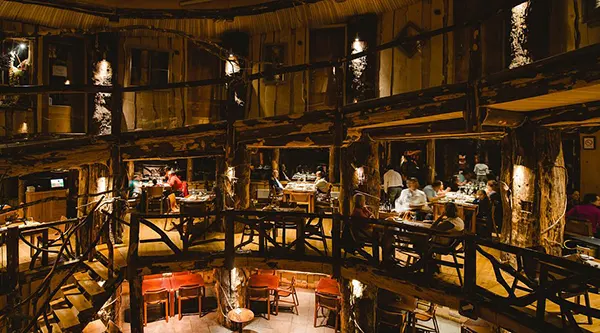
Inside, the lodge contrasts with its exterior by offering warm, rustic interiors. Wooden beams, handcrafted furniture, and stone elements dominate the design, creating a cosy atmosphere that aligns with the surrounding environment. Each room features large windows that allow natural light and forest views to become part of the interior experience.
The layout of the lodge is relatively compact, with a limited number of rooms, which contributes to a quieter and more intimate stay. Corridors are narrow and curved, following the organic shape of the building rather than a standard rectangular plan. This approach enhances the feeling of being inside a natural formation rather than a traditional hotel.
Room Features and Guest Facilities
Rooms at Montaña Mágica Lodge are individually designed, often named after local wildlife species. Despite the rustic aesthetic, they include modern essentials such as heating, private bathrooms, and comfortable bedding. However, there is a deliberate absence of unnecessary technology, encouraging guests to disconnect and focus on their surroundings.
One of the notable facilities is the outdoor hot tub area, carved from large tree trunks and filled with naturally heated water. Positioned within the forest, these tubs offer a unique way to experience the environment, especially during cooler evenings when mist and forest sounds create a distinct atmosphere.
The lodge also features a small restaurant that focuses on local Chilean cuisine, often using ingredients sourced from nearby regions. Meals tend to highlight traditional dishes adapted to modern tastes, providing a cultural element to the stay without turning it into a fine dining destination.
Visitor Experience and Practical Considerations
Staying at Montaña Mágica Lodge is less about luxury in the conventional sense and more about immersion in a specific environment. The experience is shaped by the surrounding forest, weather conditions, and the unique design of the building itself. Visitors often describe a strong sense of detachment from urban life, as mobile signal and connectivity can be limited in the area.
Activities available to guests include guided hikes, wildlife observation, and visits to nearby waterfalls within the reserve. Seasonal variations significantly influence what can be experienced, with autumn offering vivid foliage colours, while winter brings colder temperatures and occasional snowfall at higher elevations.
From a practical standpoint, reaching the lodge requires planning. The nearest major city is Valdivia, followed by a drive through rural roads. Travellers typically combine the visit with a broader exploration of southern Chile, rather than treating it as a standalone destination.
Costs, Booking, and Best Time to Visit
Accommodation prices at Montaña Mágica Lodge are generally higher than average regional hotels, reflecting its uniqueness and limited capacity. Rates vary depending on the season, with peak demand during summer months (December to February) when weather conditions are more stable.
Booking in advance is strongly recommended, particularly during holiday periods. The lodge operates on a relatively small scale, which means availability can be limited even outside peak seasons. Some packages may include guided tours or access to additional facilities within the Huilo Huilo Reserve.
The best time to visit depends on personal preferences. Summer offers easier access and more outdoor activity options, while winter provides a quieter atmosphere and a different visual character of the forest. Regardless of the season, visitors should be prepared for rain, as precipitation is a defining feature of the region.