The Frying Pan Tower: A Night on a Lighthouse in the Middle of the Atlantic
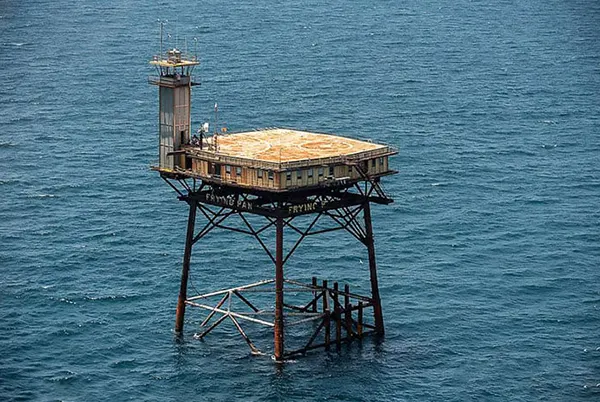
Rising from the Atlantic waters around 34 miles off the coast of North Carolina, The Frying Pan Tower stands where the Gulf Stream meets the American shoreline. Once a critical navigational aid at Frying Pan Shoals near Cape Fear, this former U.S. Coast Guard light station has been transformed into one of the most unusual overnight stays in the United States. Spending a night here is not about luxury in the conventional sense; it is about isolation, engineering history, raw ocean weather and a perspective on the sea that few travellers ever experience.
From Light Station to Offshore Landmark
The Frying Pan Tower was constructed in 1964 as part of the Texas Tower programme, a series of offshore structures designed to house crew and navigational equipment in deep water. Built from steel and anchored to the seabed by massive pilings, the tower rises roughly 80 feet above the ocean surface. Its primary function was to warn ships away from the dangerous Frying Pan Shoals, a shifting sandbank system long feared by mariners approaching Cape Fear.
By the late 1980s, advances in automated navigation systems made manned light stations increasingly obsolete. In 1989 the tower was decommissioned by the Coast Guard and left unattended, exposed to Atlantic storms, salt corrosion and hurricane-force winds. For years it stood unused, a skeletal silhouette on the horizon.
In 2010 the structure was purchased by Richard Neal, who began restoring it with the aim of preserving a unique piece of maritime heritage. Since then, ongoing renovation work has focused on stabilising the platform, upgrading living quarters and installing sustainable systems, while retaining the industrial character of the original station.
Engineering in an Extreme Marine Environment
Unlike traditional coastal lighthouses built on rock or cliff, the Frying Pan Tower is entirely offshore. Its four main steel legs are driven deep into the seabed, supporting a multi-level superstructure designed to withstand Atlantic swells and hurricane conditions. The open lattice framework reduces resistance to wind and waves, a crucial feature in severe weather.
Maintenance is a constant challenge. Saltwater corrosion affects metal surfaces, equipment and fastenings. Restoration teams must regularly sandblast, repaint and reinforce structural elements to prevent long-term deterioration. Every repair requires careful planning due to the tower’s remote location and exposure.
Power systems have also evolved. The current set-up incorporates generators, battery storage and renewable elements such as solar panels. These upgrades reduce reliance on fuel deliveries and make extended stays more practical, though the environment remains demanding and self-sufficiency is essential.
What It Is Like to Spend the Night
Reaching the tower is part of the experience. Visitors typically arrive by helicopter from the mainland, weather permitting. The short flight offers sweeping views of the North Carolina coastline before the open ocean takes over. As the aircraft approaches, the tower appears as a solitary industrial outpost surrounded by uninterrupted blue.
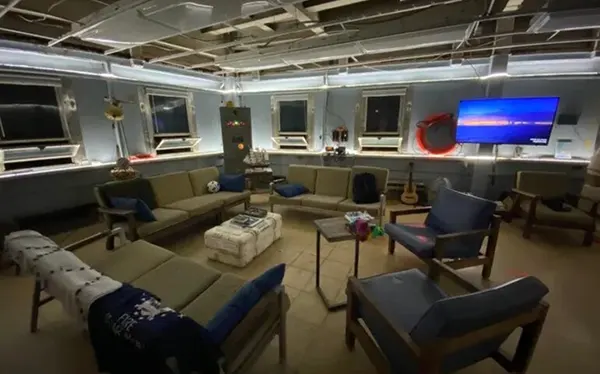
Accommodation is functional rather than indulgent. The interior includes shared bunk rooms, communal areas and basic kitchen facilities. Space is limited, and the layout reflects its original operational purpose. However, large windows and external decks provide uninterrupted sea views in every direction.
Once the helicopter departs, the sense of remoteness becomes tangible. There are no neighbouring lights, no traffic sounds and no shoreline in immediate sight. At night, the sky is exceptionally clear in good weather, and the absence of light pollution reveals dense fields of stars rarely visible from land.
Safety, Weather and Daily Life Offshore
Conditions at the tower are governed entirely by the Atlantic. Calm seas can shift rapidly to rough swells, and strong winds are common. Visitors are briefed on safety procedures, including the use of life vests, restricted zones and emergency equipment. Travel may be delayed or cancelled due to weather forecasts.
Daily routines are simple. Guests often assist with light maintenance tasks, fishing, photography or observing marine life. Dolphins are frequently spotted in the surrounding waters, and seabirds use the structure as a resting point during migration.
Communication is limited compared with mainland accommodation. While basic connectivity may be available, the environment encourages disconnection from routine digital life. This enforced simplicity is, for many, the defining feature of the stay.
Practical Considerations in 2026
As of 2026, stays at The Frying Pan Tower are arranged through scheduled programmes rather than conventional hotel bookings. Availability is limited and dependent on maintenance schedules and seasonal weather patterns. The Atlantic hurricane season, typically from June to November, can significantly affect access.
Guests should prepare for variable temperatures, strong winds and the possibility of sudden weather changes. Packing typically includes practical clothing, non-slip footwear and personal essentials. Medical facilities are not on site, and visitors must confirm that they are fit for offshore conditions before travelling.
Costs reflect the logistical complexity of helicopter transport, fuel, maintenance and structural upkeep. Revenue from stays contributes directly to ongoing restoration and preservation of the tower as a historical maritime structure rather than a conventional commercial resort.
Why the Frying Pan Tower Matters
The tower represents a transitional era in navigational history, bridging the gap between traditional lighthouses and fully automated satellite-based systems. It stands as one of the few surviving offshore light stations of its kind accessible to the public in the United States.
Its continued operation as a habitable structure depends on preservation efforts rather than large-scale commercial development. Restoration work carried out over the past decade has prevented the structure from being scrapped, which was a likely outcome before private acquisition.
Spending a night here is less about comfort and more about perspective. Surrounded by open water, exposed to wind and weather, visitors gain a direct understanding of maritime isolation and the realities faced by Coast Guard crews who once lived and worked on this steel outpost in the Atlantic.