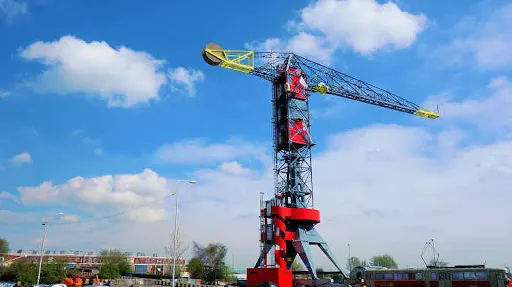
Crane Hotel Faralda (Amsterdam): luxury suites inside an industrial harbour crane
Faralda is one of those stays that rewires your sense of what a “hotel” can be. Instead of a building, you’re checking in to a working piece of Amsterdam’s industrial history: NDSM Crane 13, rising high above the IJ in Amsterdam-Noord. The appeal isn’t only the view—although it’s hard to ignore—it’s the feeling of sleeping inside steel, rivets and engineering, while the city carries on below.
What Faralda actually is: the crane, the setting, and why it matters
Crane Hotel Faralda sits on the NDSM Wharf, a former shipyard zone that has turned into a creative, event-driven neighbourhood while keeping its rough-edged character. The crane itself is a landmark from Amsterdam’s maritime era: built in the 1950s, used at the shipyard for decades, then left unused from 1984 until a restoration project brought it back into the city’s life. The hotel opened in 2014 after the crane returned to Amsterdam in 2013, which means the “converted crane” story is not a rumour—it’s a documented timeline.
The address is NDSM-Plein 78, 1033 WB, Amsterdam, and the location is part of the experience. You’re not in the canal ring; you’re in a place where container-scale space, street art and waterfront views are normal. That contrast is precisely why people choose Faralda: it gives you Amsterdam without the usual postcard framing, and it feels private even when the city is busy.
Faralda also presents itself as a privacy-first concept. Officially, it’s described as a non-public, invite-only stay, with access handled through direct requests and controlled availability. In practice, it may still appear through mainstream booking channels depending on dates and inventory—so the most realistic way to plan is to treat availability as limited and flexible rather than guaranteed.
A quick orientation: height, access, and who it suits
The headline figure is height. Listings commonly describe the crane at around 50 metres (about 164 feet), and that scale affects everything: the lift ride, the wind you hear at night, even how you think about stepping outside. If you’re comfortable with heights, it’s thrilling in a calm, grown-up way. If you’re not, Faralda can be challenging—there’s no “normal building” buffer between you and the drop.
Access is part of the practicality. From Amsterdam Central Station, the simplest route is the free ferry to NDSM (the crossing is short and frequent), followed by a walk across the wharf. If you come by car, official info points to limited paid parking near the crane, with event days being the main wildcard. The key is to plan arrival like you would for a venue, not like you would for a chain hotel on a main road.
Who enjoys Faralda most? People marking a specific occasion, travellers who care about design and story, and anyone who wants a stay that feels like a location in its own right. It’s less ideal for anyone who wants lots of on-site facilities, a lobby scene, or the easy anonymity of a big hotel.
The suites: layout, names, and what you get for the money
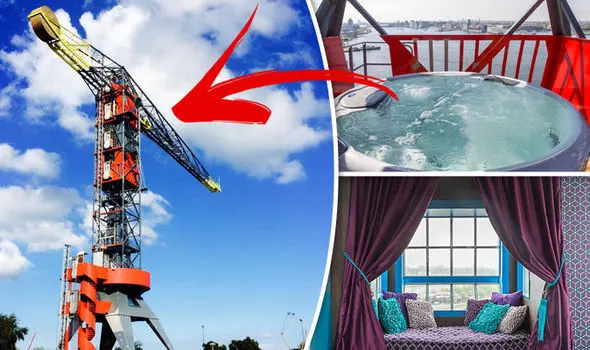
Faralda has three suites—no more—and each is designed as a two-level duplex. The basic layout is consistent: a generous living area, a separate bedroom with a king-size bed, and design-led bathrooms. The small number of rooms is not a marketing gimmick; it’s a physical constraint of the crane, and it’s a major reason the stay feels quiet and self-contained.
You’ll often see the suite names referenced as Free Spirit, Secret, and Mystique. Names aside, what matters is that each suite leans into an artistic, curated look rather than conventional “luxury minimalism”. Expect bold choices, objects that feel collected rather than purchased as a set, and a sense that the interiors were designed to be remembered.
Pricing is also part of the reality check. Faralda publicly frames its rates at around €1,000 and up per suite, per night, with variability by date. That positions it closer to an occasion stay than a casual weekend hotel—and it’s worth thinking of it that way, because the value is tied to scarcity, setting, and the fact that there’s nothing quite equivalent next door.
The rooftop jacuzzi and the “only here” details
One of Faralda’s signature features is the rooftop jacuzzi (sometimes described as a spa pool). It’s not a generic hot tub add-on; it’s a viewpoint, in warm water, above the city, with the IJ and Amsterdam skyline spread out in multiple directions. Weather matters—wind and rain can change the mood quickly—so the best approach is to treat it as a bonus that can become the highlight when conditions are right.
Because the crane is a structure, not a building, small details feel different: sound travels differently, the lift is part of the story, and the sense of separation from the city is sharper. Even basic moments—making coffee, putting music on, standing at the window—carry a slight “how is this a hotel?” feeling. That’s the main emotional payoff Faralda offers.
It’s also worth being honest about comfort expectations. This is luxury in the sense of design, exclusivity and space, not luxury in the sense of endless amenities. The stay works best when you’re here for the setting and the narrative, and you’re happy to do your dining and exploring elsewhere in Amsterdam.
Planning a stay in 2026: booking strategy, timing, and the NDSM area
The smartest way to plan Faralda is to decide what you want the stay to be. If it’s a proposal, anniversary, birthday or once-in-a-few-years splurge, aim for a night when you can arrive early, slow down, and actually use the suite rather than only sleeping in it. The crane setting rewards time: sunset, night lights, and early morning each feel distinct from the same window.
Because availability can be limited, flexibility helps. If you have fixed travel dates, start checking early and consider weekday options if weekends don’t show space. If you’re choosing dates around events on the NDSM Wharf, remember that the area can be lively; that’s part of its charm, but it can affect parking and the general rhythm outside.
Once you step back onto ground level, NDSM is a practical base for exploring Amsterdam-Noord and still reaching the centre quickly. The free ferry connection makes the crossing feel almost effortless, which means you can do canal-side sightseeing in the day and return to something that feels separate from the typical tourist flow at night.
Practical tips that make the experience smoother
Pack with the height in mind. If wind noise bothers you, bring earplugs. If you plan to use the rooftop jacuzzi, a simple robe-friendly mindset helps—this is not the kind of place where you want to overthink logistics once you’re there. And because you’re on a crane, it’s sensible to travel light rather than arriving with heavy luggage and multiple bags.
Plan food deliberately. Faralda is best when you decide in advance whether you want a “stay-in” night with snacks and drinks, or a “go-out” evening in Amsterdam. The suite experience works with both, but the only bad option is arriving hungry and improvising in a part of town where venues can be busy around events.
Finally, set expectations with anyone you’re travelling with. Faralda is not a standard hotel and doesn’t pretend to be one. If your priority is a story-driven stay in a landmark structure—with privacy, views, and a sense of occasion—it delivers. If your priority is a classic five-star routine with extensive facilities, it may feel more like a beautiful oddity than a perfect fit.